Project 04 Objects and fabrication
3D Printing
Creatures and a character study
This collection turns reference-informed creatures and a photographed display bust into inspectable printing prototypes. The preserved rigid fox has a layered plume; the compact articulated fox has four captive moving sections, a tail-mounted eye and real fur relief, shown in three finished production views. Reptile skin and the bust's armor grooves and weave are geometry, not coloured shaders. Two creator-supplied STLs are grouped and credited separately, not presented as AI-generated geometry. Every candidate remains unprinted.
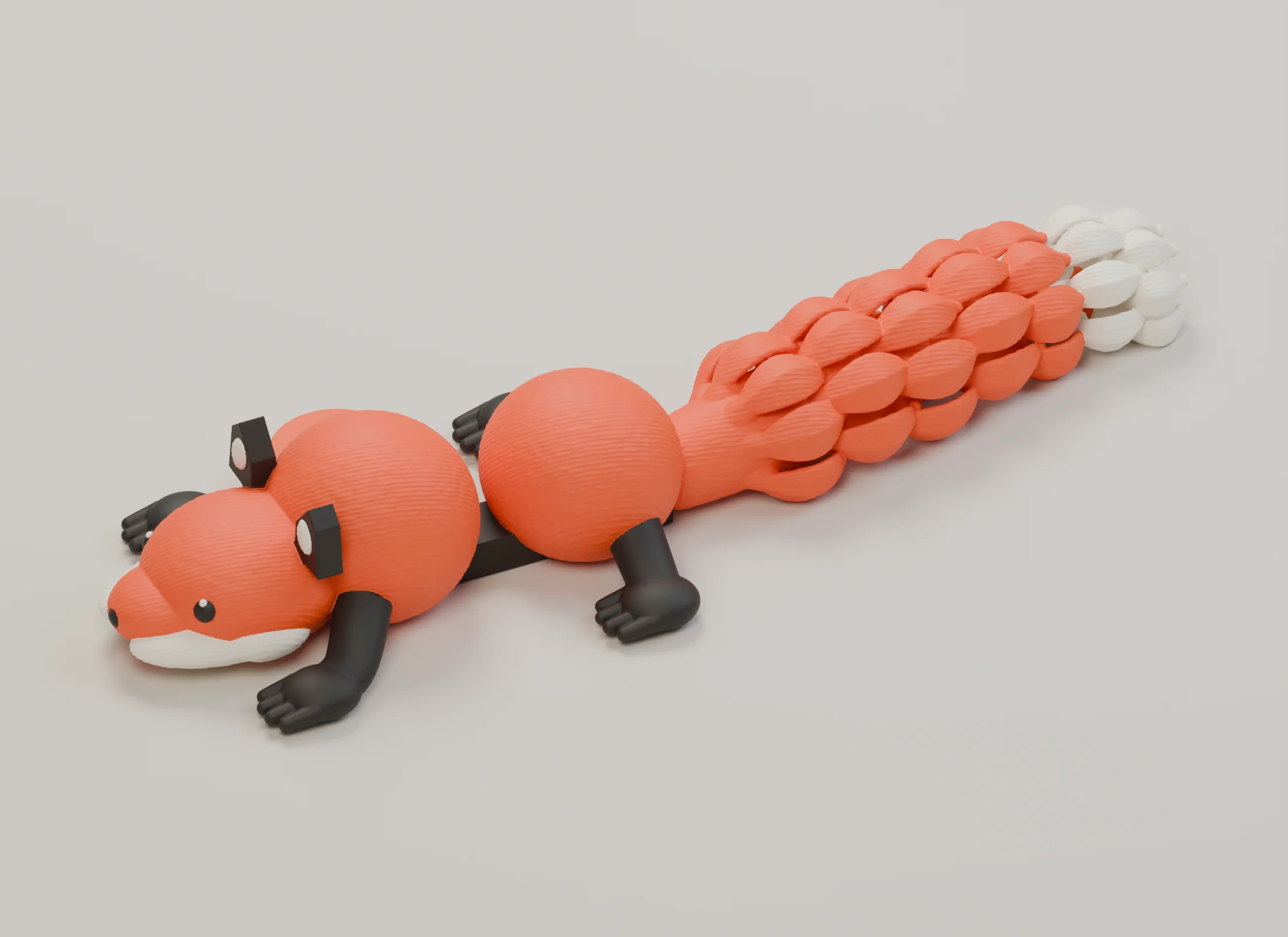
- Original creature designs
- 5
- Photo-informed display bust
- 1
- Existing supplied STL models
- 2
- Colours per creature
- 3 max
- X2D / H2D nozzle profiles
- 0.4 mm
- Eye/gap and captive-joint coupons
- 2
Beyond the render
Turn the idea around.
10 interactive models
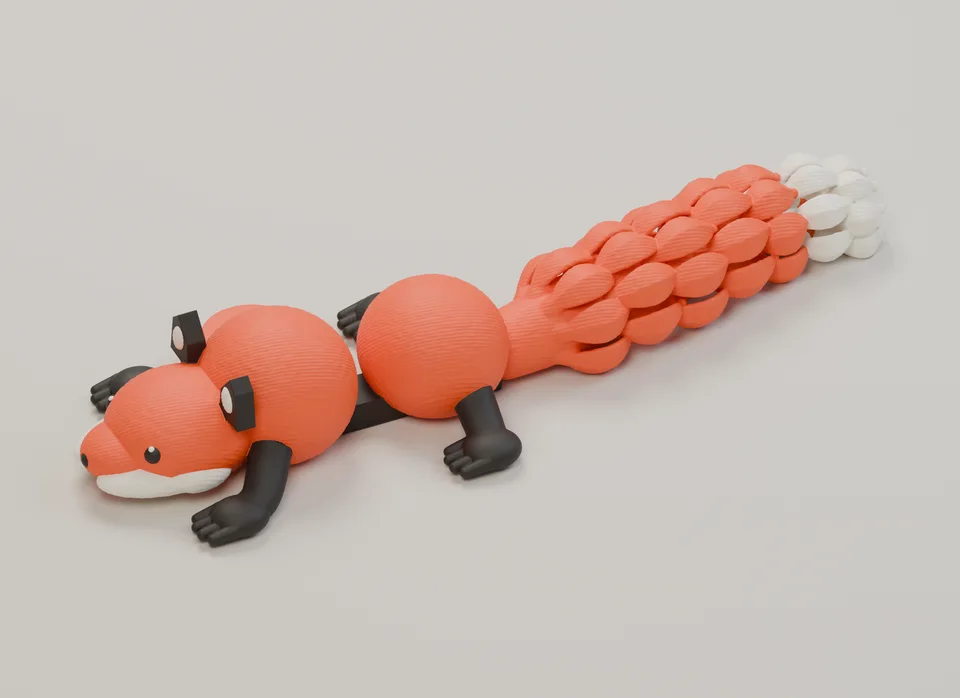
Load the model to inspect its geometry.
Loads only when requested. No 3D download while you browse the renders.
Drag or use arrow keys to rotate. Scroll, pinch or use Zoom +/- to move closer. Zoom is bounded; Reset view restores the framing.
Rigid fox key ring
The original rigid fox with a shoulder attachment eye. A simplified colour display copy of an unprinted prototype; not a printing file or strength certification.
Web-display copy in metres, with simplified geometry and materials where needed. Not a print file, measurement tool or safety certification. Native Blender/STL assets are unchanged.
01 / The starting point
What we set out
to make and inspect.
A summary of the modelling and inspection brief, rather than a verbatim prompt.
Create handheld 3D-printing models for the Bambu Lab X2D from the supplied images: a usable fox key ring, fire dragon, Rauisuchus and playful starfish. Preserve that rigid fox, then add a separate compact articulated fox for the H2D, informed by the reference labelled 75 mm: head, two body lobes, three captive hinges and a tail-mounted eye. Use at most three colours, retain editable Blender and millimetre STL versions, and check geometry and actual slicing. Reconstruct a detailed, single-colour Black Panther-inspired full bust from the four later photographs, including the helmet, shoulders and base. Also preserve and inspect the existing articulated dragon and flexi starfish STLs without claiming them as generated models. Keep the work together with honest physical-testing limits.
02 / From brief to scene
How it takes shape.
- 01
Preserve the supplied inputs and licences under projects/3d-printing. Inspect the references from multiple views, using the genuine Rauisuchus JPEG and scientific sources to separate anatomy from artistic inference.
- 02
Build original geometry with explicit Python mesh data, broad roots, rounded details and applied metric coordinates. Preserve fox-keyring as a rigid design. The separate fox-articulated uses four physical captive moving sections and three yaw hinges; retain the supplied flexi starfish as its own separately credited design.
- 03
Review silhouette and anatomy before adding clearance-limited fur, irregular scales or woven armor relief after structural fusion. Use all four bust photographs for front, side and rear features. Show high-resolution hero renders alongside neutral-material close-ups of actual STL reimports.
- 04
Check native files and reimported STLs for topology, winding, intersections, openings, bed contact and selected sections. Use the actual X2D 0.4 mm profile, with a 0.12 mm baseline for the detailed originals.
- 05
For the new fox, screen the unposed print geometry and sample rigid motion between sections within +/-25 degrees. Use an actual H2D 0.4 mm, 0.12 mm process with compatible colours of one polymer; the reference PETG HF profile is not the owner's spool. Coupon evidence and full-model release evidence remain separate.
- 06
Credit Stone Pestle for the supplied Flexi Starfish and kimseungwoo11 for the articulated flame dragon. Preserve the starfish's 26 shells and translation-only placement; quarantine the dragon because open feet and intersecting surfaces remain.
- 07
Present the generated designs and supplied-STL inspections in this shared gallery, using the same project format as the architectural studies. Keep raw meshes, private references and toolpaths outside the website, and test the coupon and finished prints physically before use.
03 / The rendered result
Every point of view.17
Open a view to zoom and explore.
Generated prototypesBack to sections
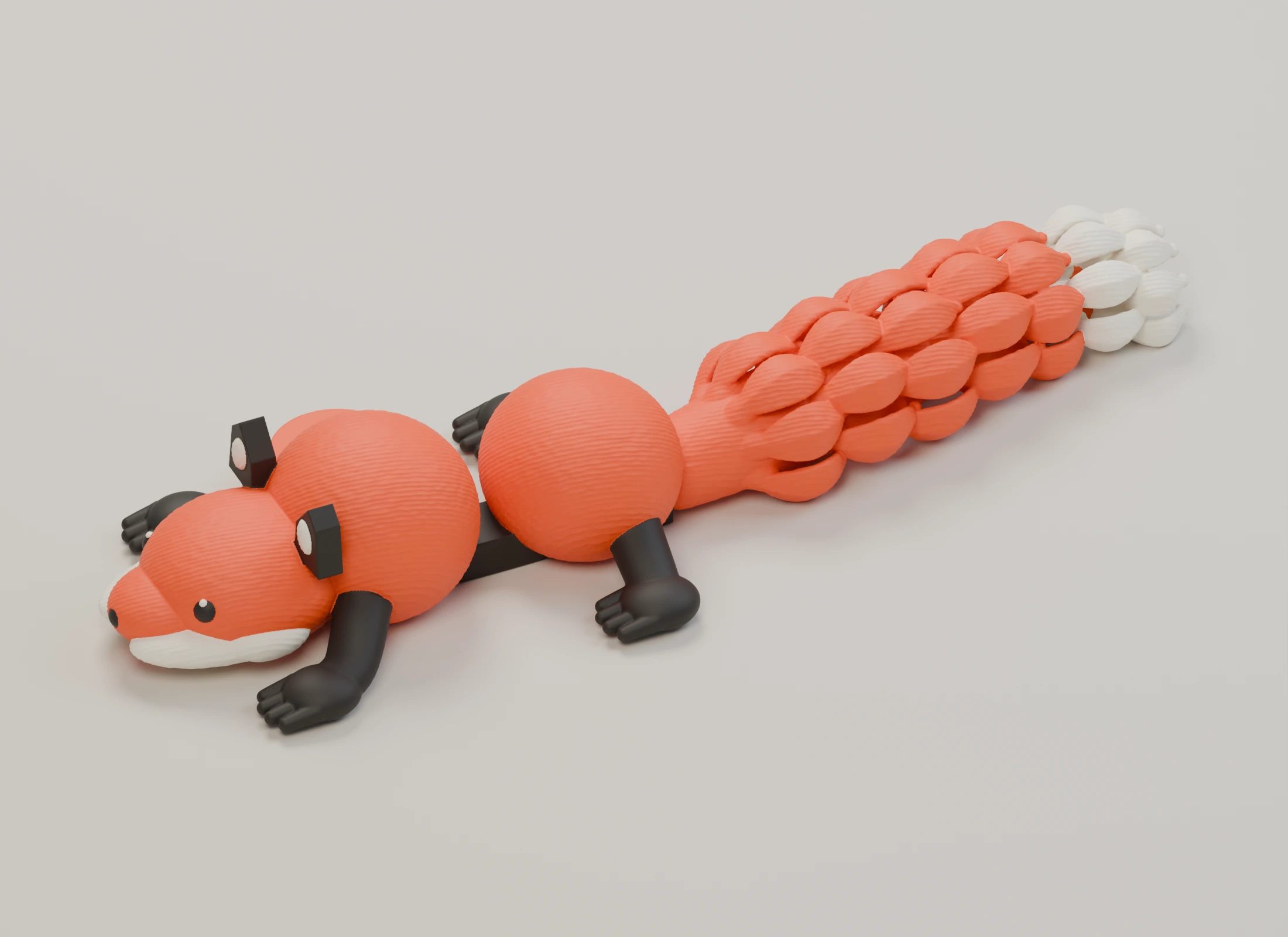 01 / 17
The preserved rigid fox key ring
A low fox face, triangular ears and flat paws lead into a long curved plume of overlapping orange and ivory tufts. The open reinforced eye sits behind the head, keeping key-ring loads off the decorative tail. The separated body lobes share a rigid concealed spine.
Explore this prototype in 3D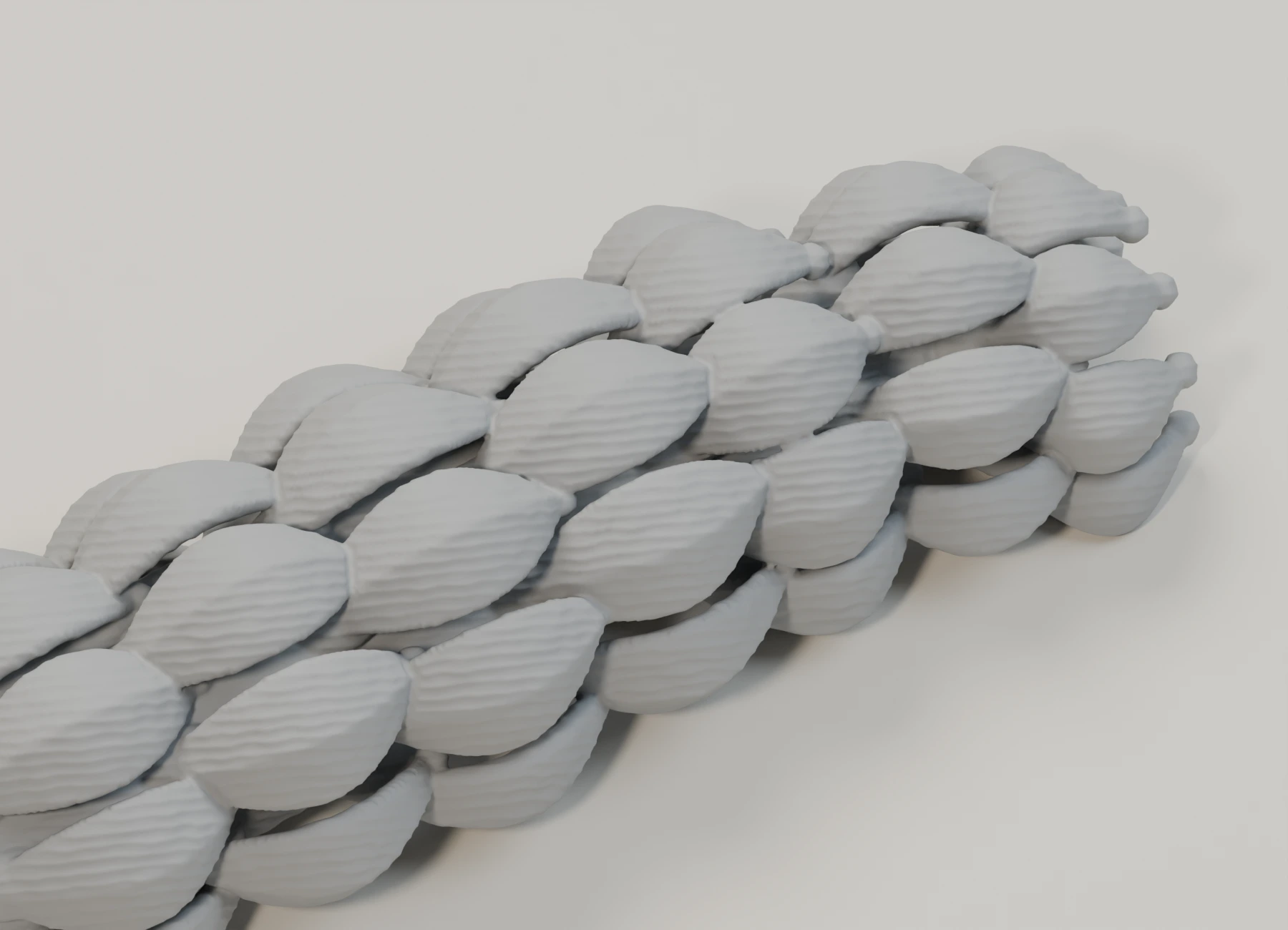 02 / 17
The plume, without paint
A close-up rendered from a fresh STL import in one neutral material shows the actual curved tufts, rounded tips and fine geometric coat relief. There is no image texture or colour shader hiding the exported surface.
Explore this prototype in 3D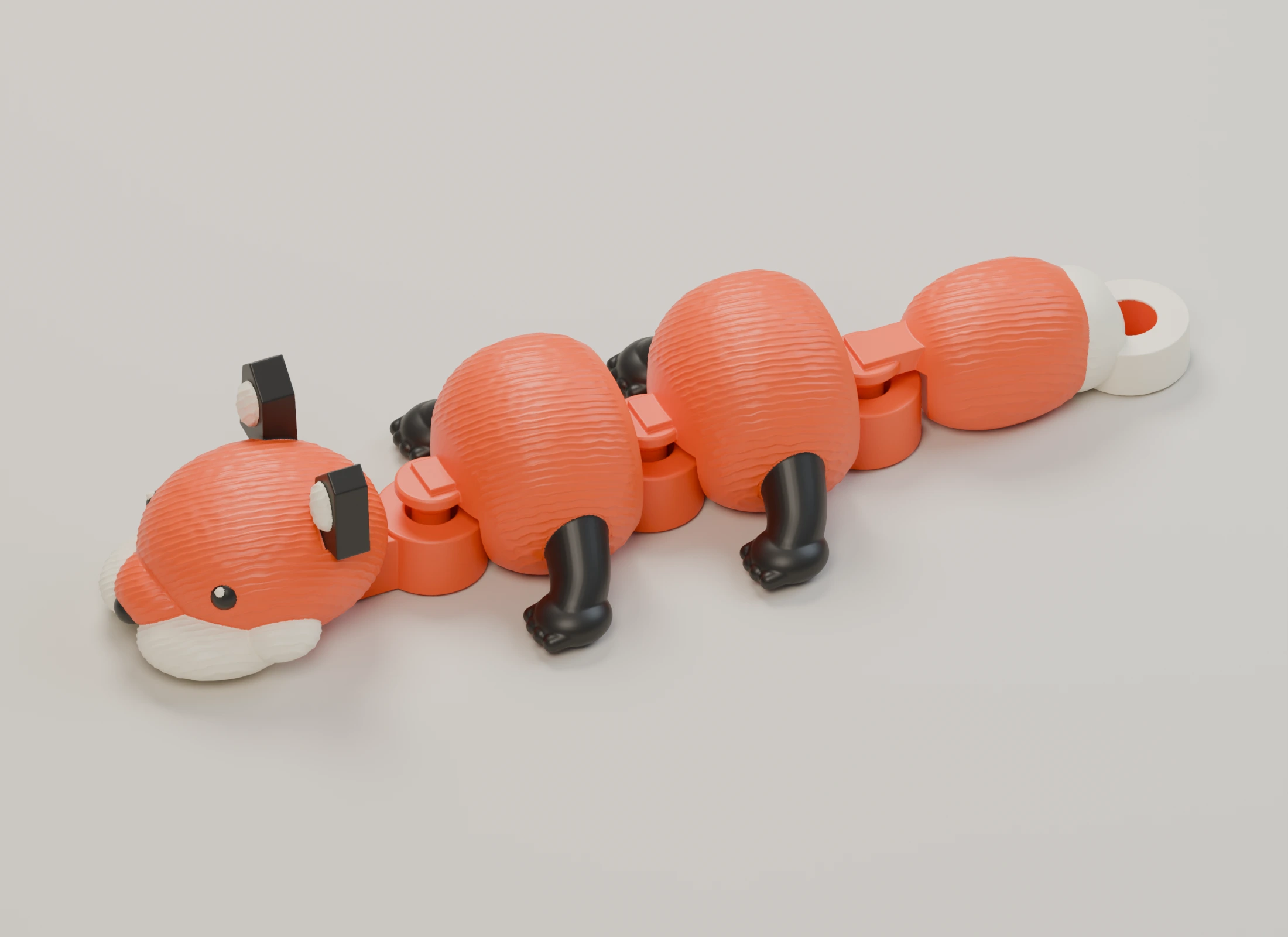 03 / 17
Four sections, three captive hinges
This separate original fox has four physical captive moving sections: head, two body lobes and a compact ivory-tipped tail with the key-ring eye. The final mesh measures 88.84 x 29.98 x 17.95 mm; approximately 89 mm is a selected prototype size, not a verified match to the reference labelled 75 mm. The rigid fox-keyring is preserved. This finished native/STL design remains unprinted, and its monochrome X2D slice is not H2D colour approval.
Explore this prototype in 3D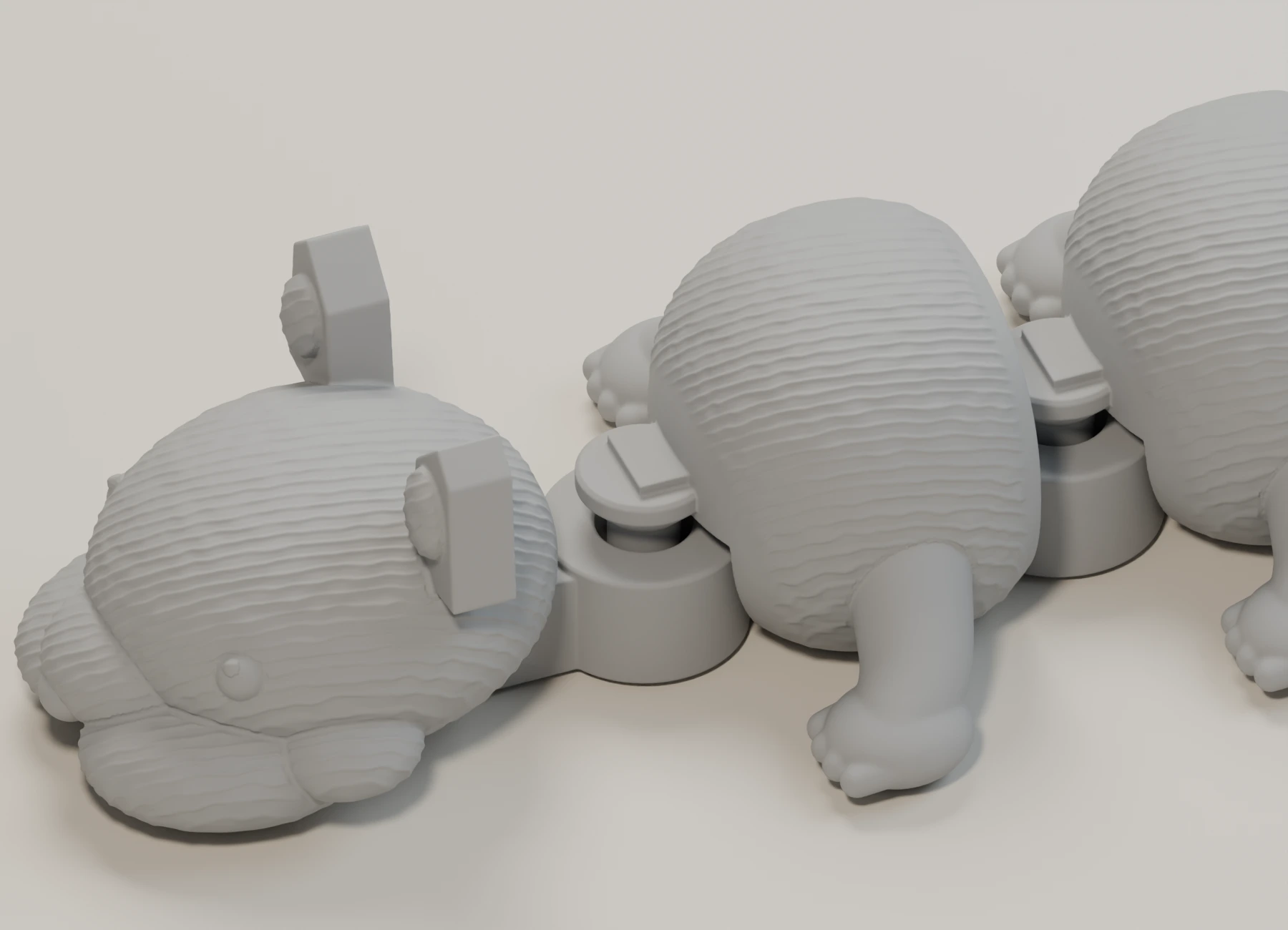 04 / 17
Fur and joint seams in the STL
The neutral-material STL detail shows real post-union fur at 0.75 mm pitch and up to 0.18 mm displacement, with measured native p95 displacement around 0.125 mm, not a shader texture. Joint seams and the full-height tail-eye bore are protected. Keep the joints support-free; a 0.4 mm nozzle, 0.12 mm layers and calibrated compatible polymer still determine the printed result.
Explore this prototype in 3D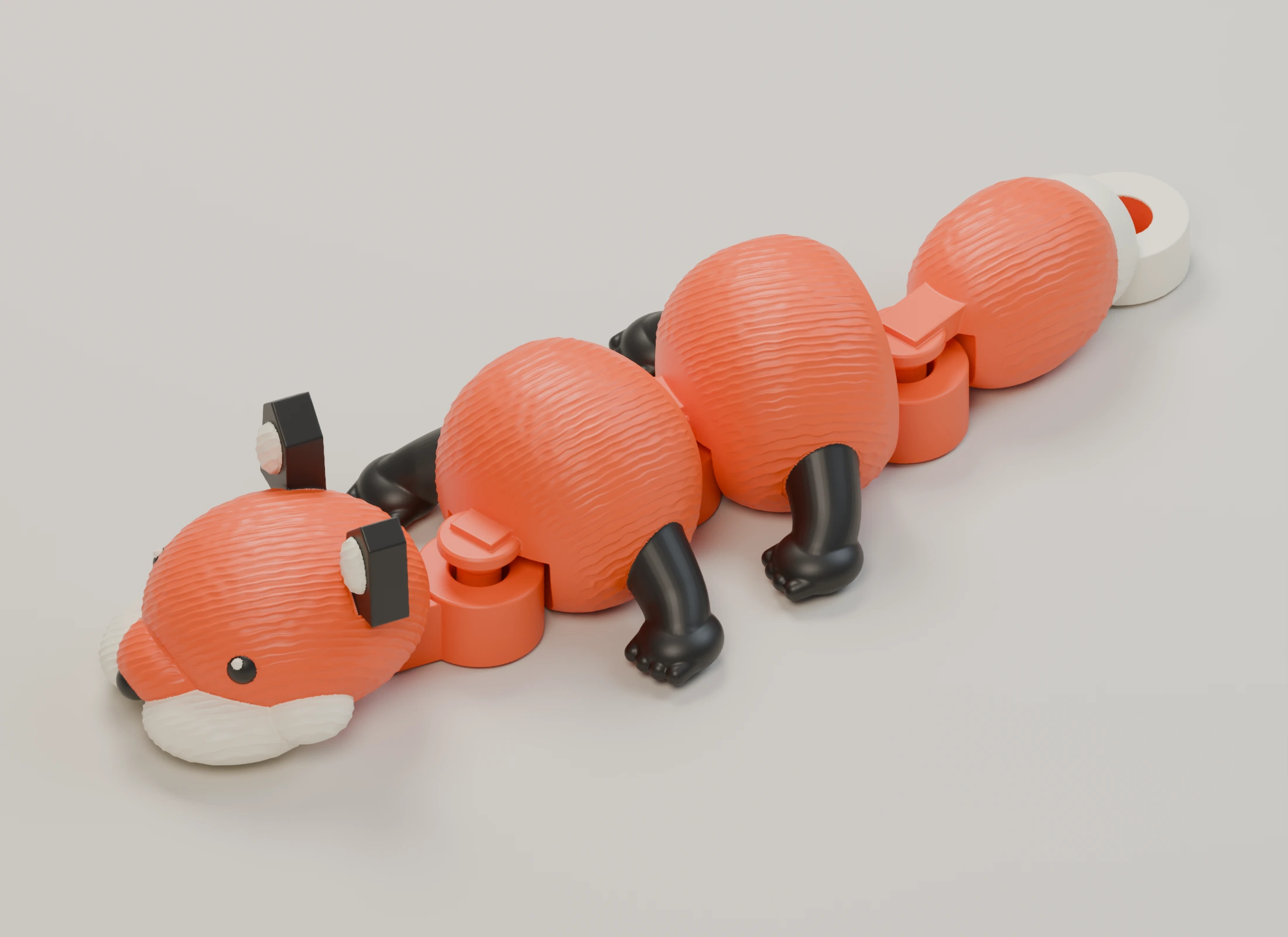 05 / 17
A flexed copy, not a fused spine
A display copy bends the three hinges to 25, -25 and 25 degrees while retaining four captive sections. Native and actual STL each passed 15 sampled configurations: rest, eight +/-25-degree endpoint combinations and six single-joint endpoints. This is not continuous swept-volume or physical-print proof. Import the three aligned colour files as one parent, never split or arrange the four moving sections, and print the separate coupon before a sacrificial fox and pull/twist/wear testing.
Explore this prototype in 3D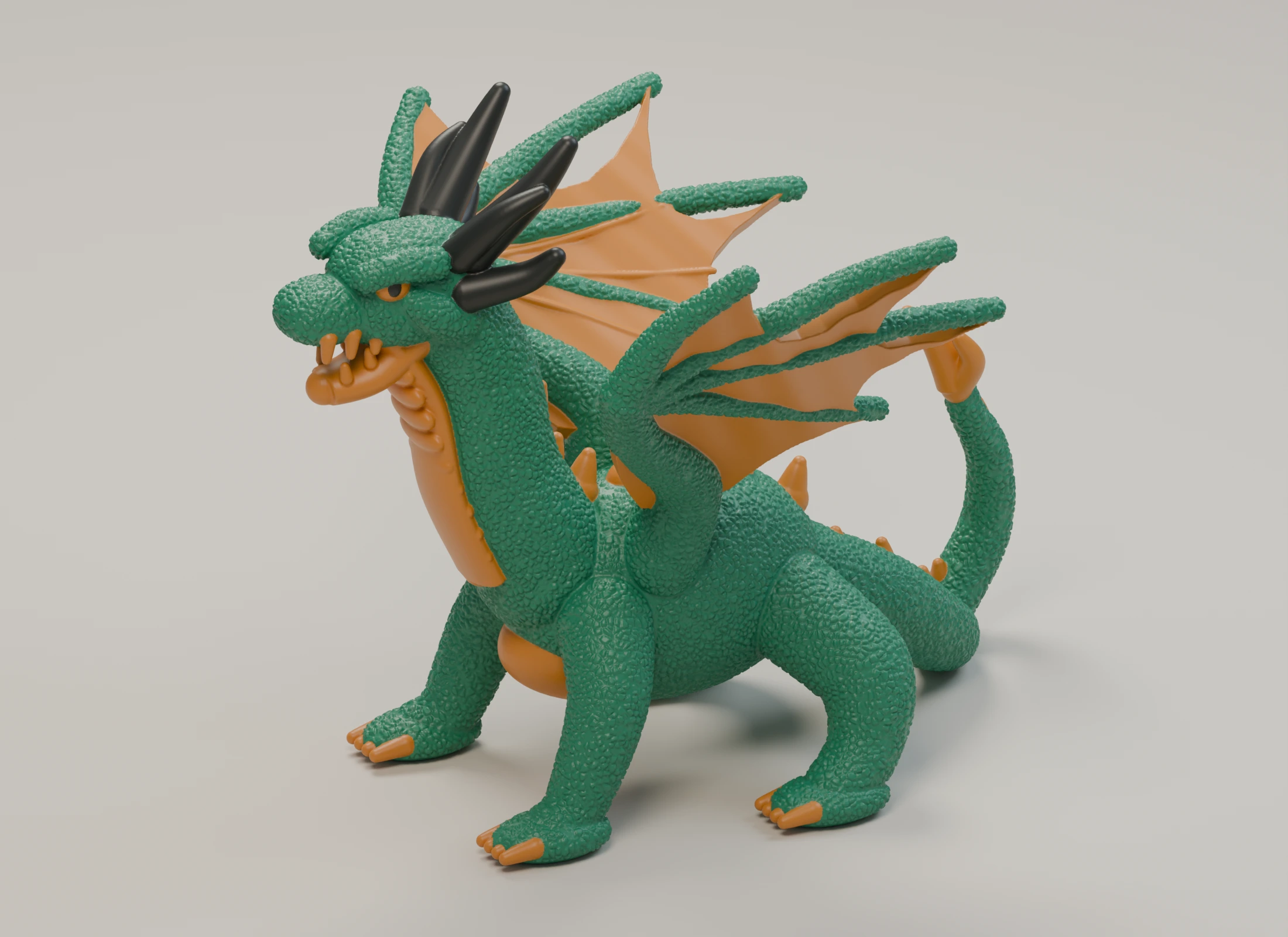 06 / 17
Wings, strengthened
A jade-and-gold dragon combines a reptilian head, open jaw, ventral scutes and dense scales with curved scalloped membranes, integral veins and a rising flame-tipped tail. An inferred asymmetric wing pose exposes both membranes; the jaw, wings and tail need supports.
Explore this prototype in 3D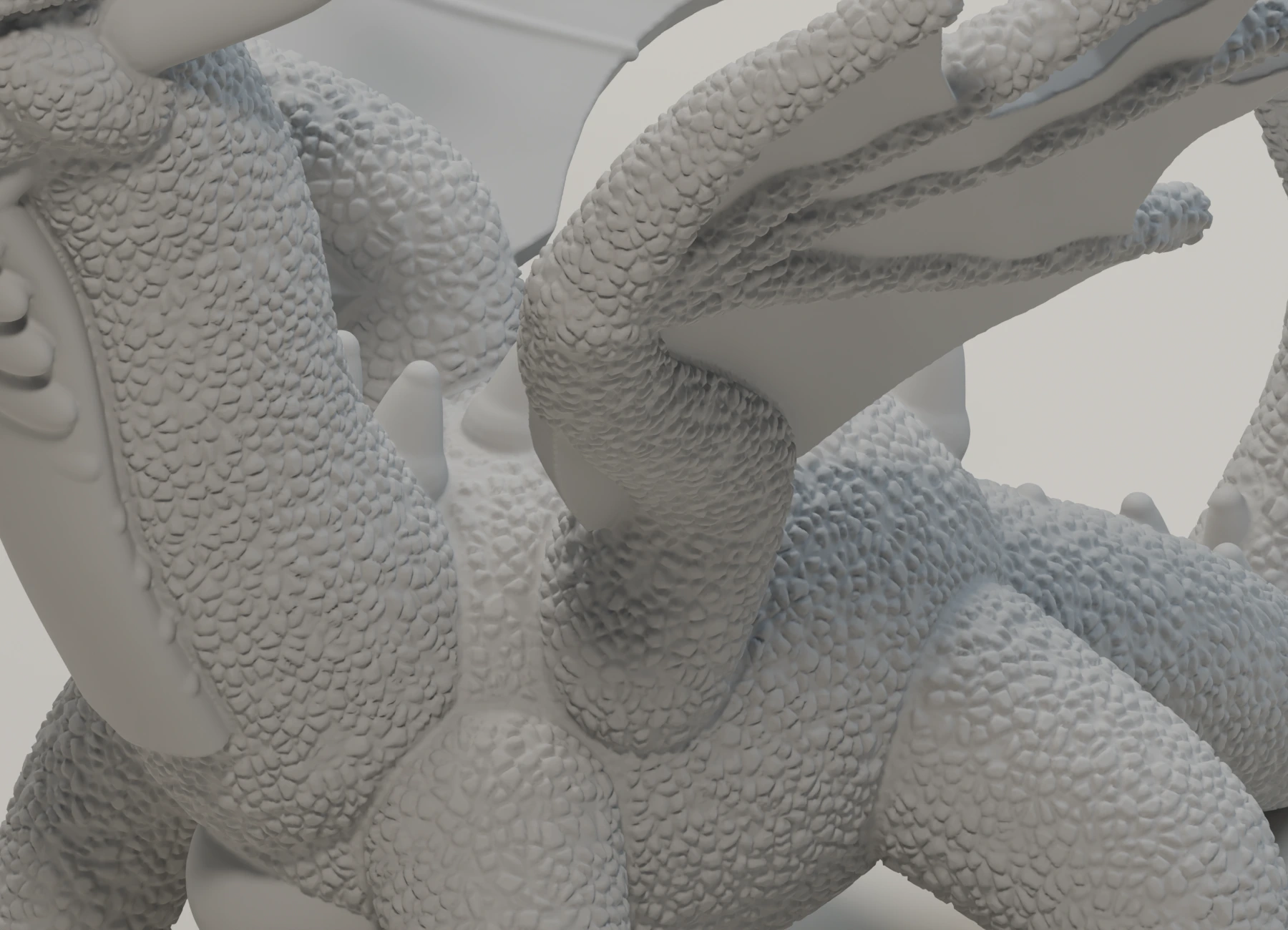 07 / 17
Scales and membrane geometry
The neutral STL reimport exposes real scale relief and the shoulder-to-wing construction. Curved membranes, creases and veins are geometry; the membrane section is screened separately from its decorative surface.
Explore this prototype in 3D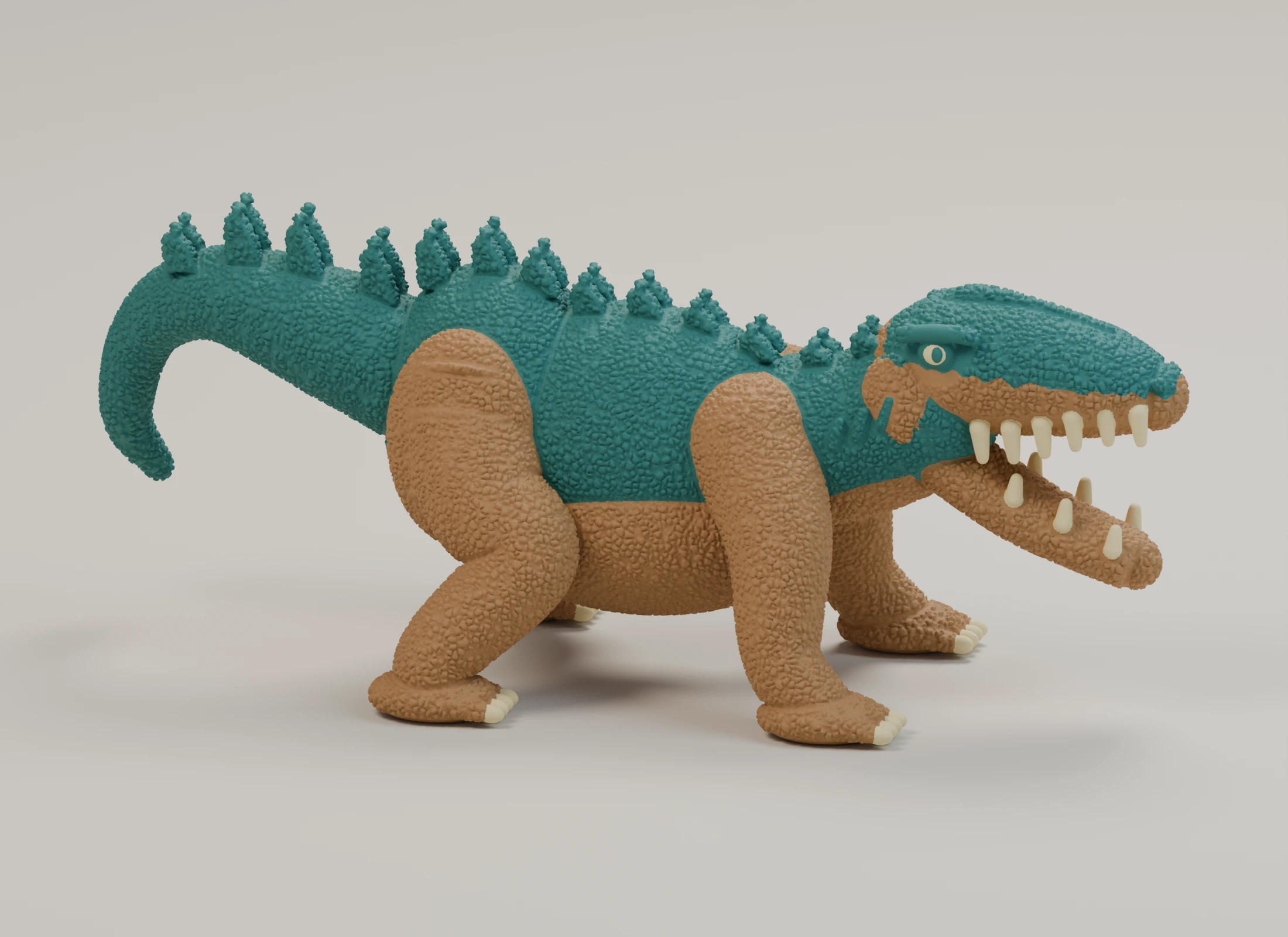 08 / 17
An armoured interpretation
The supplied JPEG informs a low broad skull, open jaw, high haunches, arched tail and teal-and-umber colour blocking. Dense irregular skin relief and actual folds replace the first-pass large bead rows. Rounded osteoderms and inferred soft anatomy remain an artistic reconstruction.
Explore this prototype in 3D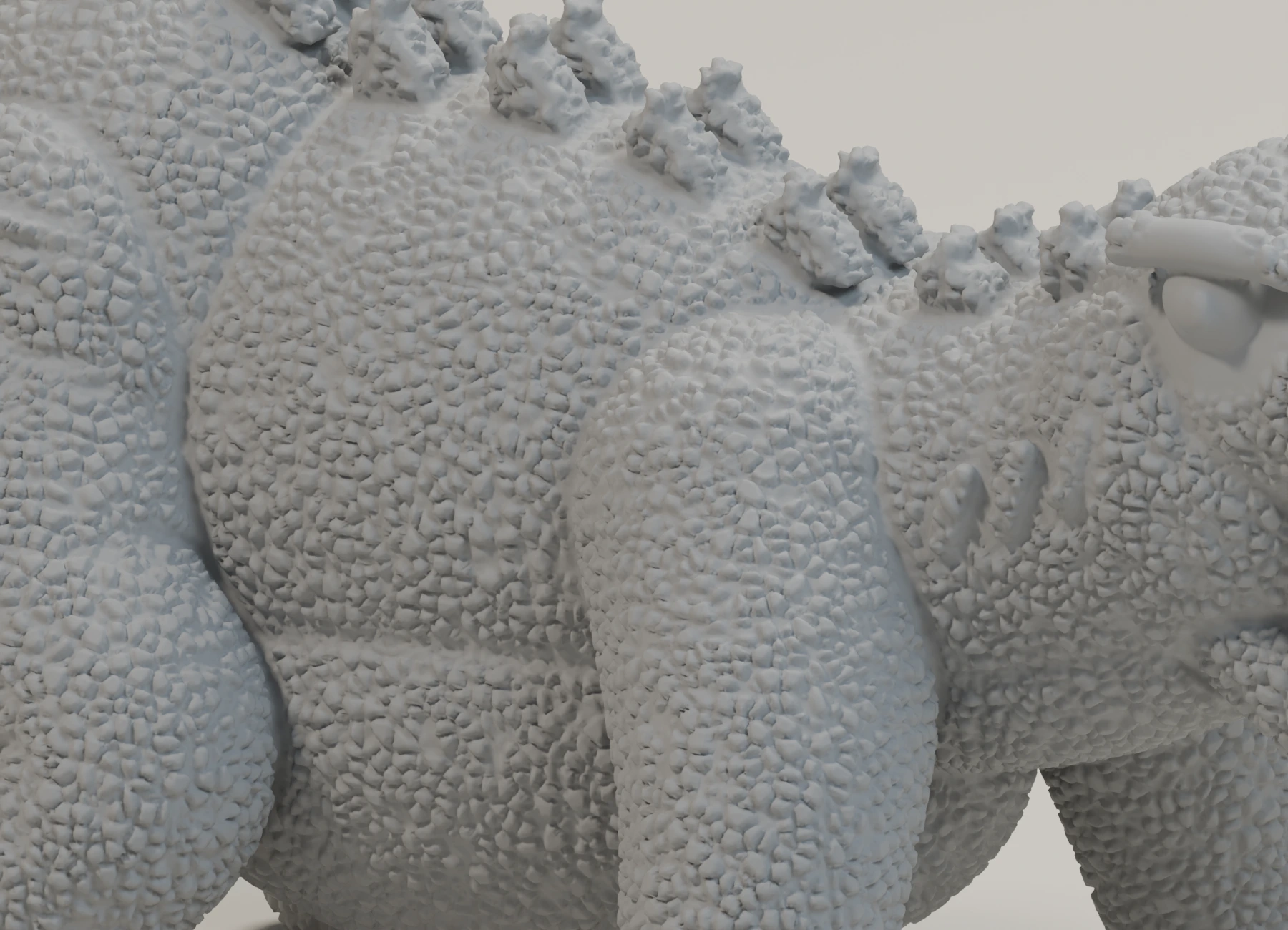 09 / 17
Rough skin that survives export
A fresh, untextured STL import shows the irregular scale cells and muscular transitions in close-up. The skin is actual vertex relief rather than a normal map; printed sharpness still depends on nozzle, layer height, material and calibration.
Explore this prototype in 3D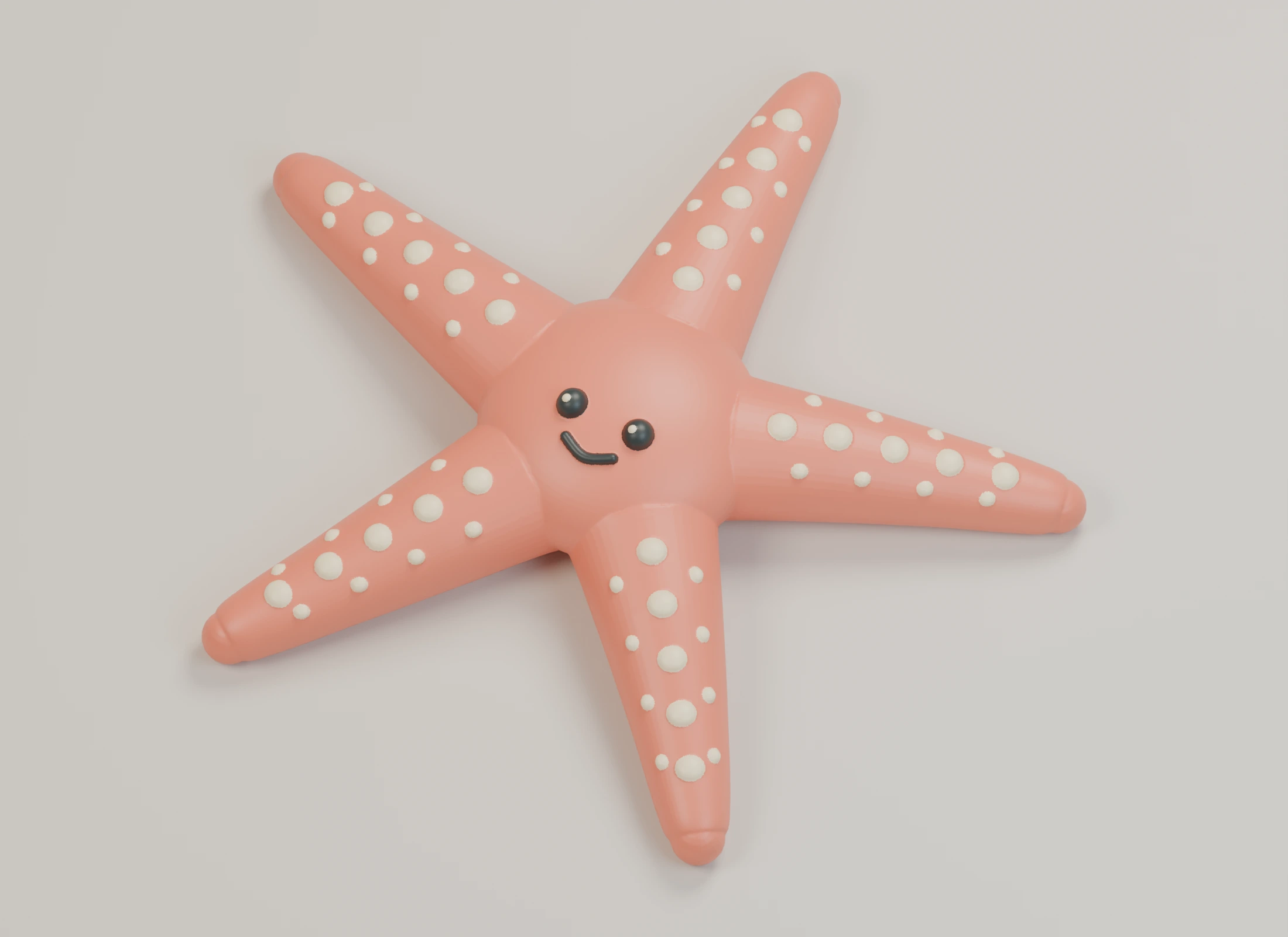 10 / 17
Five arms, one solid
Rounded coral arms, ivory tactile beads and an integral friendly face make a larger solid alternative to the separately licensed flexi model. Its broad roots avoid moving connectors but do not substitute for testing the finished print.
Explore this prototype in 3D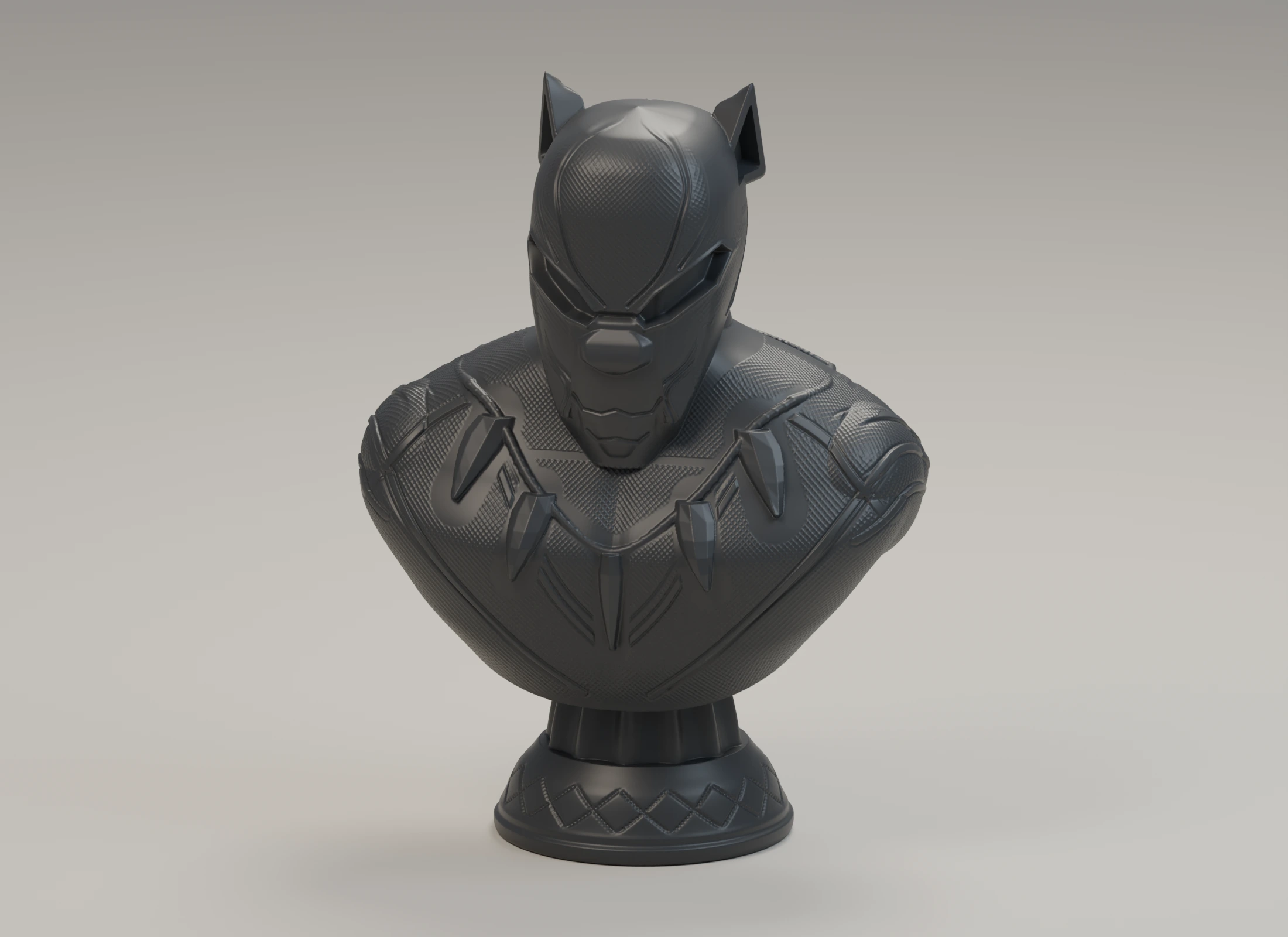 11 / 17
A mask, shoulders and pedestal
The primary photographs guide the revised broad nasal apron, steep eye outlines, outward-facing ear bowls and deeper necklace V. Fine woven cloth and post-union suit piping replace the first pass's blank chest and coarse markings. This single-colour display bust uses a chosen roughly 180 mm nominal height; it is not a wearable mask or an official franchise asset.
Explore this prototype in 3D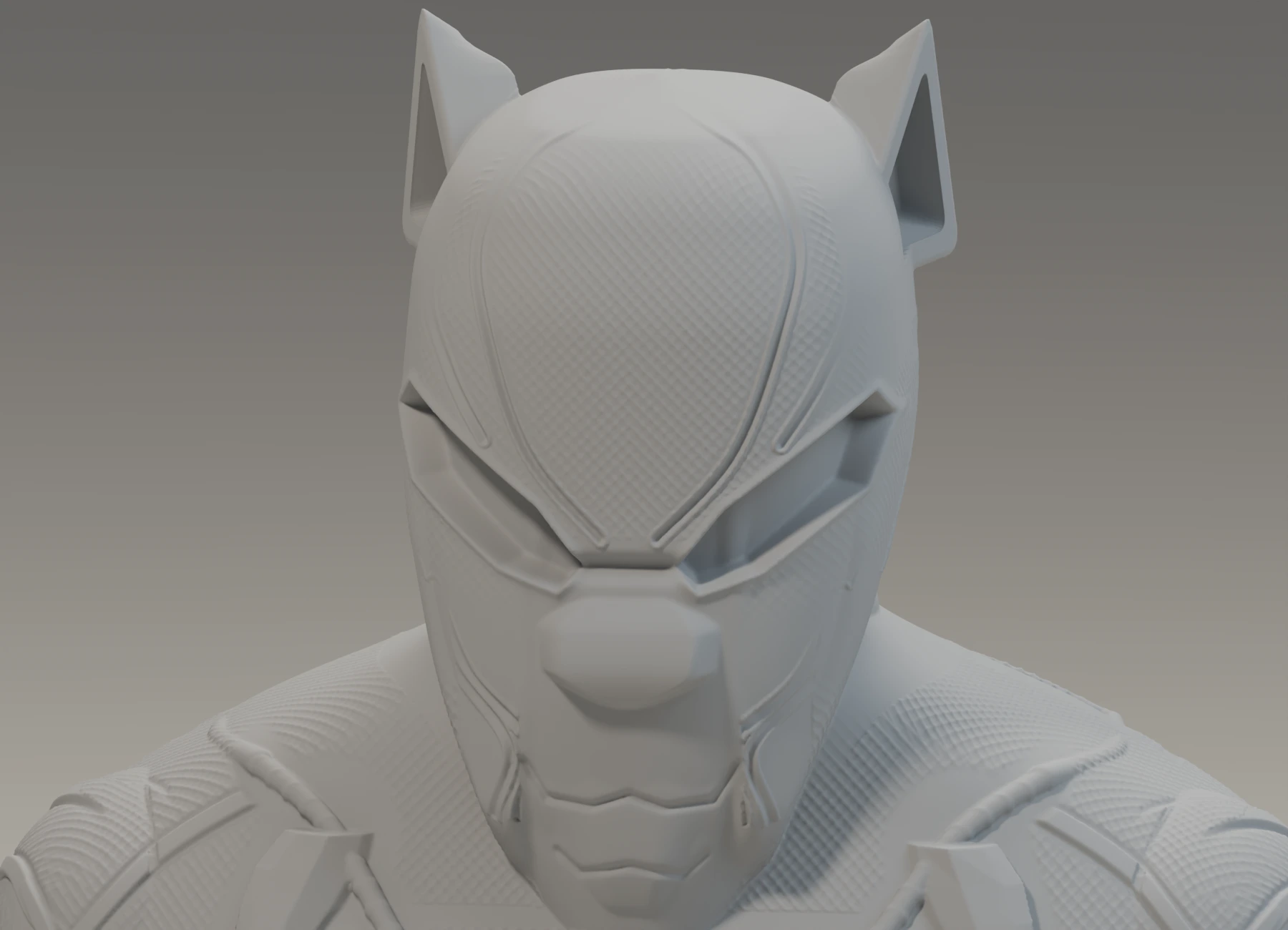 12 / 17
Armor detail in the actual STL
A fresh millimetre STL import, rendered in one untextured neutral material, exposes the broad nasal shield, temple-wrapping eye recesses, cheek planes and clean mask trim. The details are actual geometry finished after union, not a shader effect. Printed definition still depends on nozzle, layer height and calibration.
Explore this prototype in 3D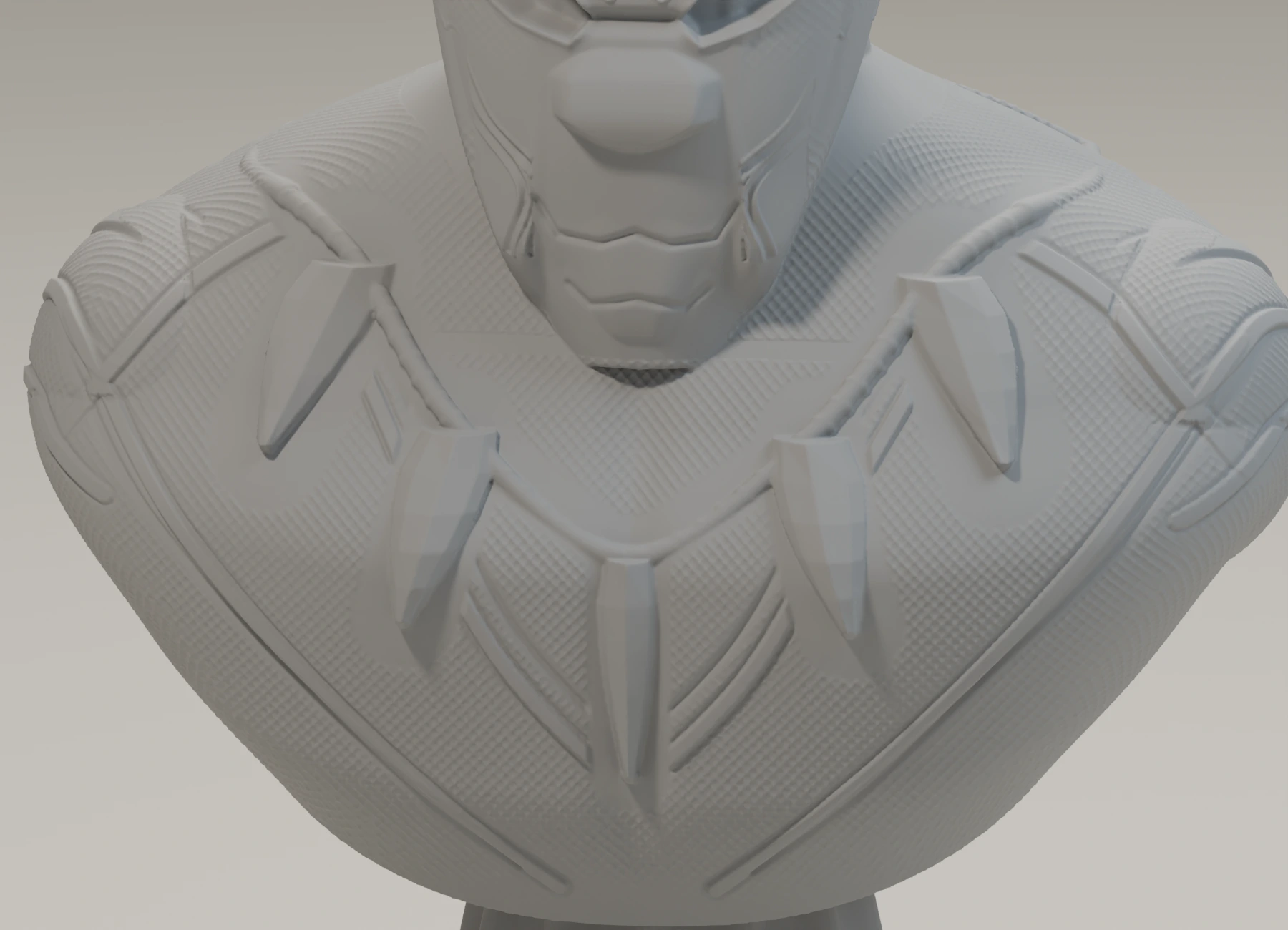 13 / 17
Fine cloth, not a blank chest
A second neutral view of the same independently checked STL focuses on the upper cloth, slimmer suit piping and attached necklace blades. The 0.95 mm geometric weave covers the chest and wraps the shoulders while metal-like hardware stays smooth. Secondary costume photographs inform construction detail without replacing the primary bust reference.
Explore this prototype in 3D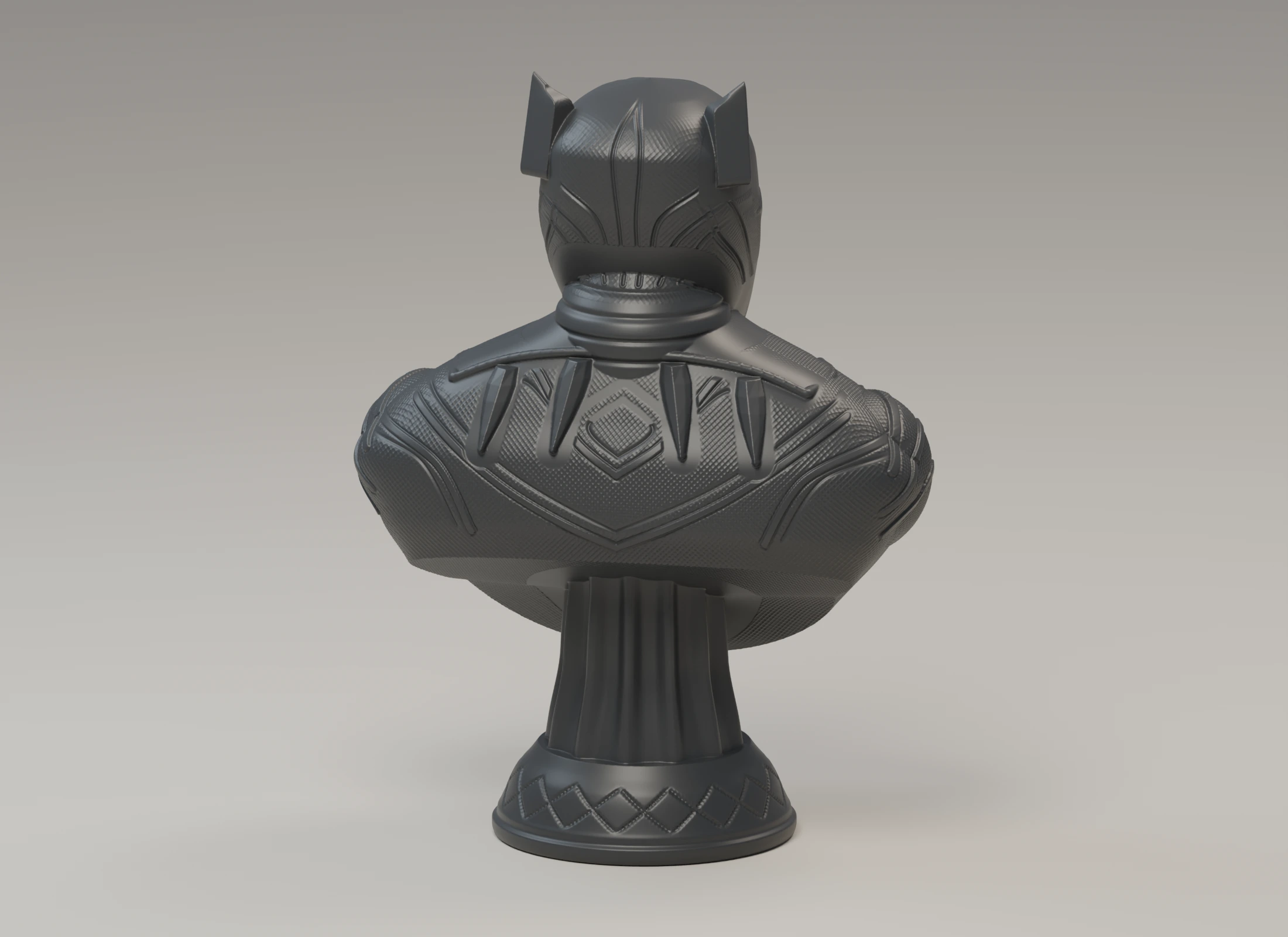 14 / 17
The bust from behind
The rear photographs inform branching helmet channels, nape bands and angular back armor. The complete necklace circumference, twelve pedestal flutes and hidden crop geometry remain inferred. The circular foot is the supplied print orientation; shoulder undersides and the chin require support review.
Explore this prototype in 3D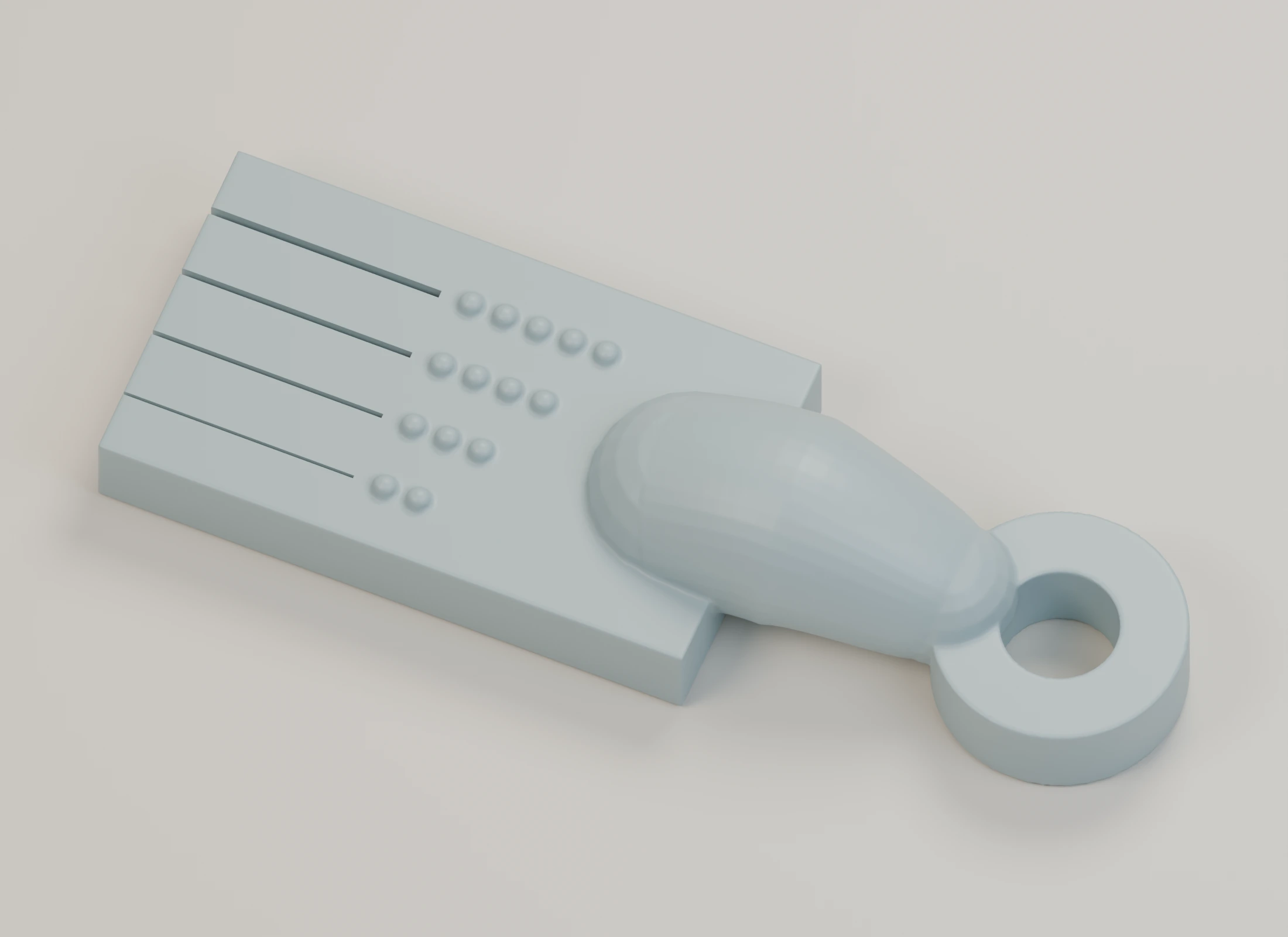 15 / 17
Test the process first
The coupon combines a reinforced eye with 0.2, 0.3, 0.4 and 0.5 mm through-slots, identified by two through five raised dots. It helps reveal actual printed clearances and layer bonding before a full model is attempted.
Explore this prototype in 3DSupplied STL inspectionsBack to sections
 16 / 17
Flexi Starfish - supplied STL
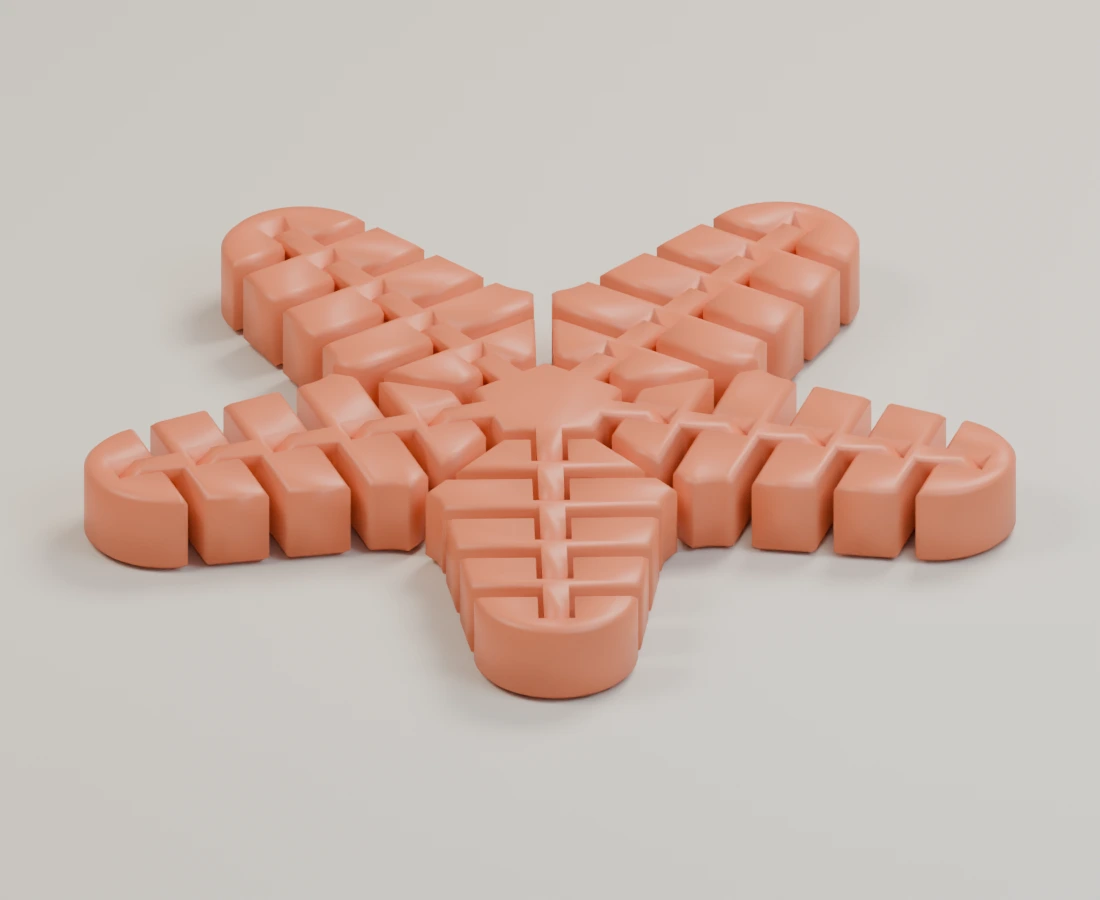
Geometry and single-colour slice checkedSupplied STL by Stone Pestle, not AI-generated or reconstructed here. Translation-only preparation preserves all 26 shells. Geometry and the X2D slice pass; movement and strength remain untested. CC BY-NC 4.0.
Source: Stone Pestle / CC BY-NC 4.0 Explore this prototype in 3D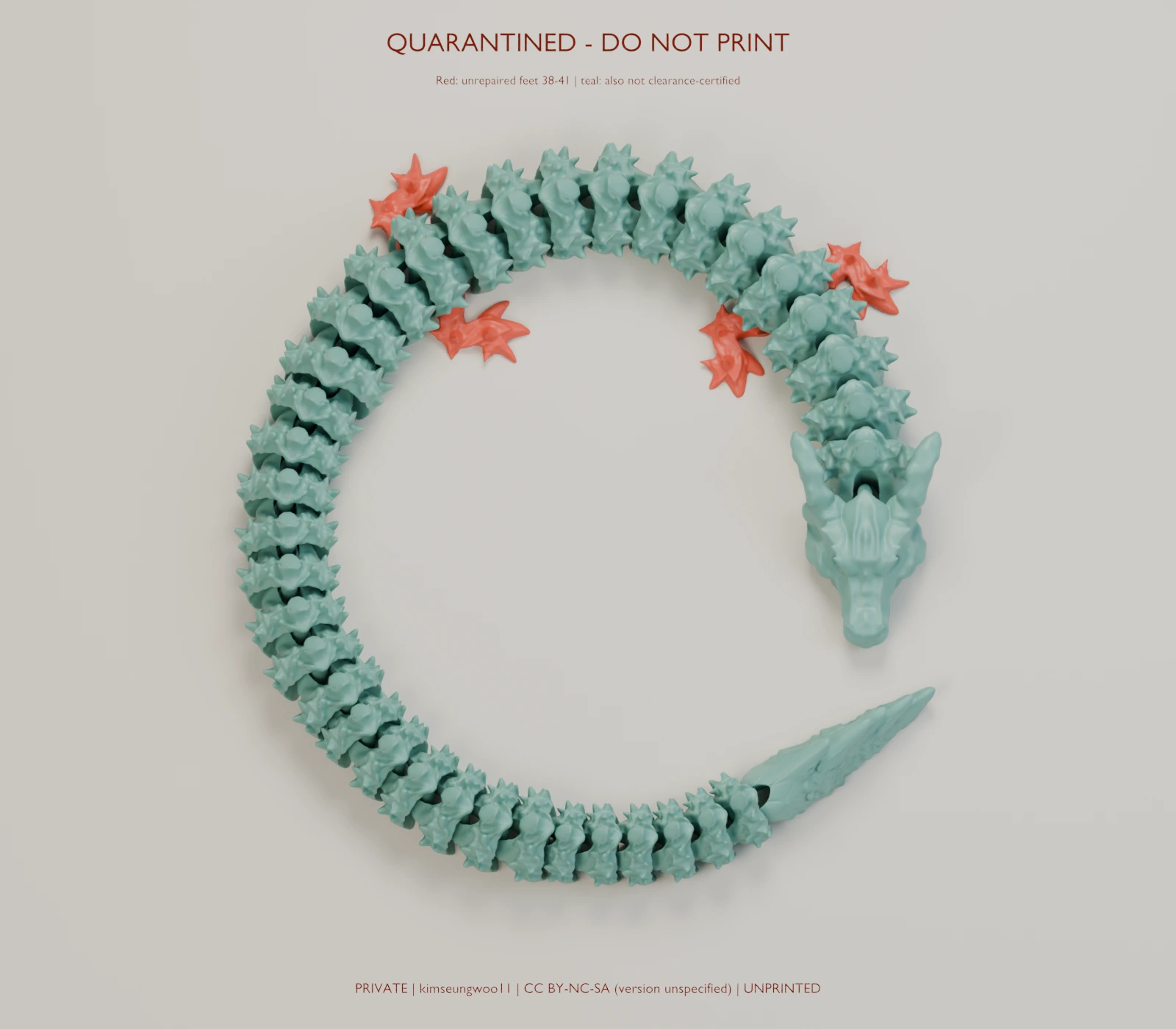 17 / 17
Flame dragon - QUARANTINED supplied STL
QUARANTINED - DO NOT PRINTSupplied STL by kimseungwoo11, not AI-generated here. QUARANTINED - DO NOT PRINT: four feet remain open and surfaces intersect. This labelled diagnostic is not a print-ready model. CC BY-NC-SA; the public listing specifies 4.0.
Source: kimseungwoo11 / CC BY-NC-SA 4.0 (public listing) Explore this prototype in 3DNext experiment